WhatsApp: 0086 130 5444 6098
Email:top-slimming@hotmail.com
WhatsApp: 0086 130 5444 6098
Email:top-slimming@hotmail.com
Language:


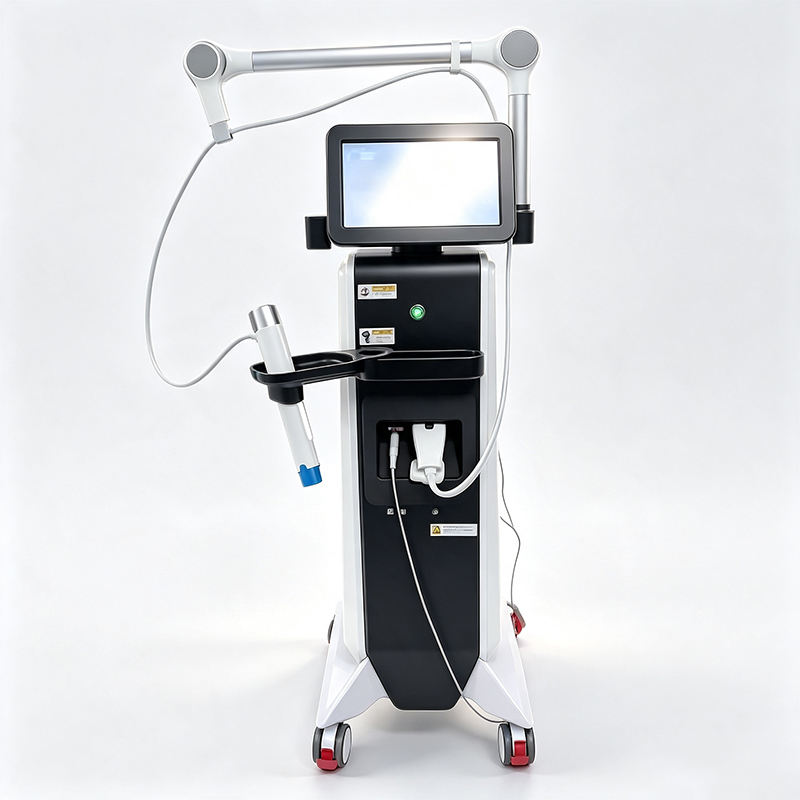
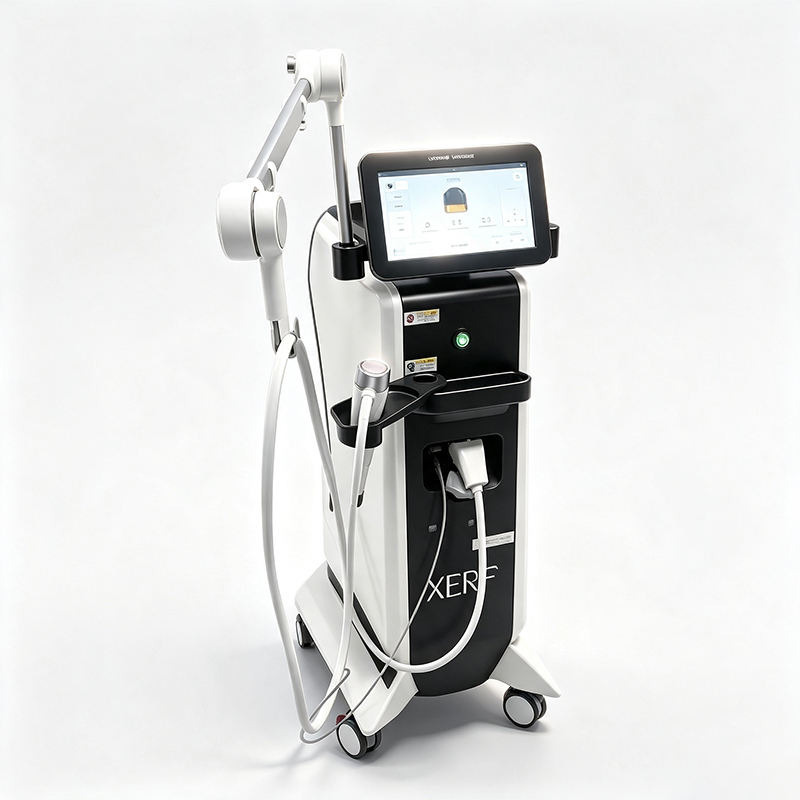
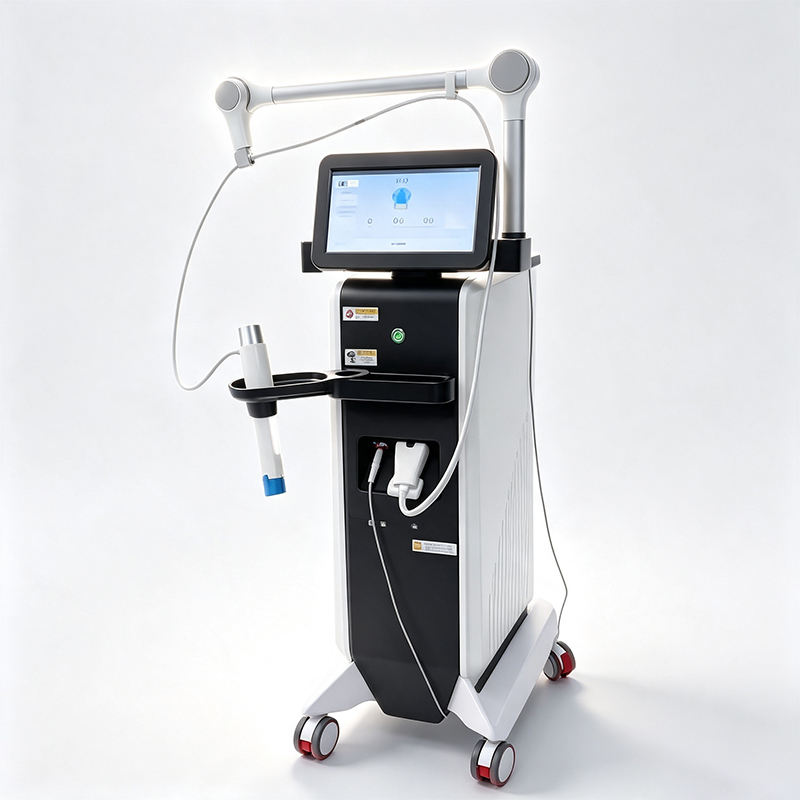
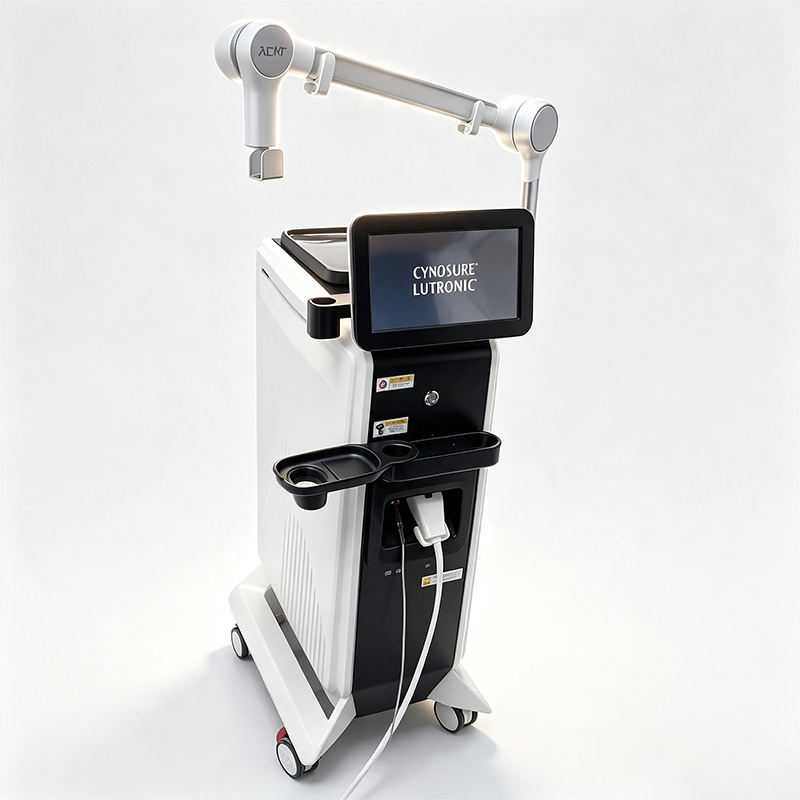




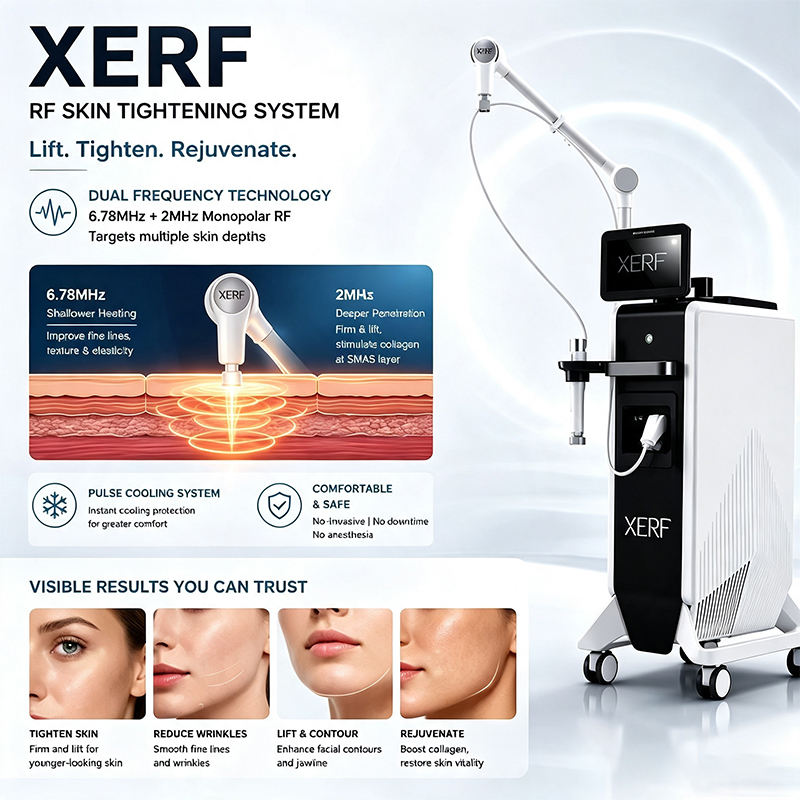
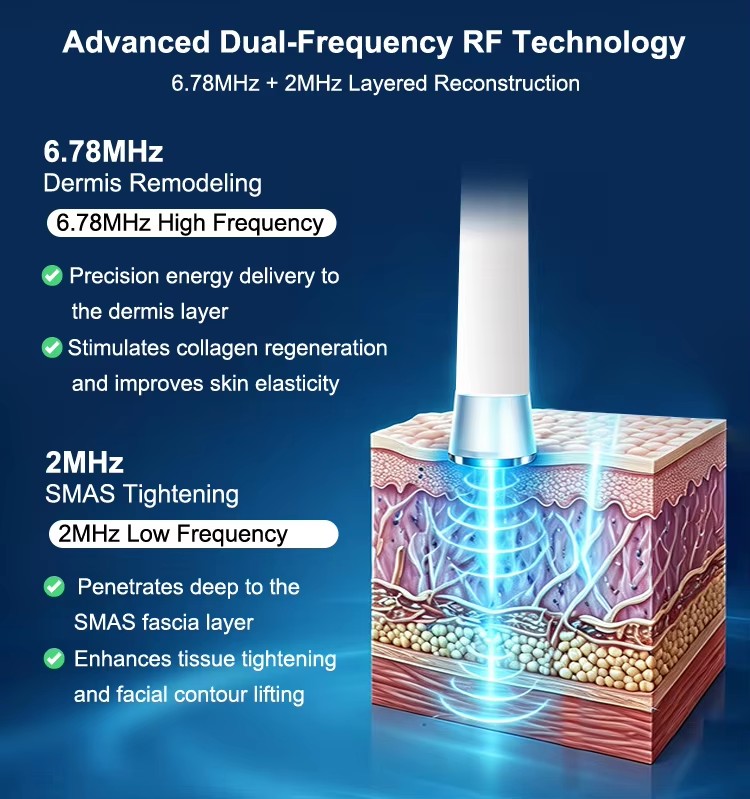
XERF employs the world's first dual-frequency monopolar radiofrequency technology, simultaneously delivering two distinct frequencies—6.78 MHz and 2 MHz—in a single treatment. This unique dual-frequency emission allows energy to precisely target multiple tissue depths, ranging from the epidermis and dermis to the subcutaneous fat layer and the SMAS (superficial musculoaponeurotic system) fascia.
6.78 MHz (High Frequency) – Primarily heats the superficial dermis, stimulating collagen reorganization and improving overall skin texture and quality.
2 MHz (Low Frequency) – Penetrates deeper into the subcutaneous fat layer and the SMAS fascia, delivering structural lifting and contour-tightening effects.
The device is equipped with Wave Fit pulse technology and an integrated ICD (Intelligent Cooling Device) cooling system. Before each energy pulse, the system pre-cools the epidermal surface, ensuring that the treatment feels like a warm, soothing massage. No topical anesthesia is required, and there is zero downtime—patients can apply makeup and resume normal activities immediately after the session.
XERF is indicated for the face, jawline, neck, and periorbital areas. It is particularly suitable for individuals with mild-to-moderate skin laxity, and is highly effective in addressing structural concerns such as:
Deepening nasolabial folds
Drooping of the malar fat pads (apple cheeks)
Blurring or loss of jawline definition
| Time Point | Clinical Effect |
|---|---|
| Immediately after treatment | Immediate tightening sensation due to collagen fiber contraction. |
| 1 month post-treatment | Increased dermal collagen density with more organized fiber alignment. |
| 2–3 months post-treatment | Thickening of the SMAS fascia; continued improvement in contour and lifting effect reaches its peak. |
| Maintenance phase | Annual touch-up session recommended; some individuals may benefit from 2 sessions spaced 3–4 months apart. |
A single session produces visible results.
However, maximum efficacy is typically achieved after 2–3 sessions, depending on the individual's baseline skin laxity and treatment goals.
XERF features strict temperature control:
Surface temperature is maintained below 43°C.
Deep tissue temperature reaches 50–70°C, which is well below the threshold for adipose tissue damage (65–70°C).
Theoretically and clinically, XERF does not cause facial fat loss when used according to the recommended parameters.
| Aspect | XERF | Thermage |
|---|---|---|
| Technology | Dual-frequency dynamic RF (6.78 MHz + 2 MHz) delivering multi-layer synergistic heating. | Single-frequency monopolar RF focused on fixed-depth deep heating. |
| Treatment Experience | Gentle, warm sensation; no anesthetic required; zero downtime; patients can go out immediately after treatment. | Moderate to significant discomfort; topical anesthesia usually required; mild redness/swelling for several hours post-treatment. |
| Best Suited For | Individuals seeking a comfortable, time-efficient experience with mild-to-moderate laxity—ideal for busy professionals. | Patients with more significant volume loss and advanced skin aging, where the face appears "heavy" due to excess soft tissue and collagen depletion; typically offers longer-lasting single-session results. |
| Feature | XERF | Thermage |
|---|---|---|
| RF Technology | Dual-frequency monopolar (6.78 MHz + 2 MHz) | Single-frequency monopolar |
| Target Layers | Epidermis, dermis, subcutaneous fat, SMAS fascia | Primarily deep dermis/subcutis |
| Pain Level | Minimal (no anesthetic) | Moderate to high (anesthetic required) |
| Downtime | None | Several hours (redness/swelling) |
| Ideal Candidate | Mild-to-moderate laxity, busy lifestyle | Advanced laxity, more pronounced structural aging |
| Number of Sessions for Best Results | 2–3 sessions | Often 1 session (with longer duration) |
| Maintenance | Annual or 3–4 month interval (2 sessions) | Annual touch-up |

 Contact WhatsApp
 Contact Email
 Contact Skype